One - The Point Before the Line
One must eventually become Two.
What begins in pure singularity must one day meet the other.
Where One shows up in your life
One is the moment you decide to begin.
It is the first day after a long period of feeling stuck.
The first application you send. The first boundary you set. The first time you admit that something has to change.
Sometimes One is less dramatic. It can simply be the moment you stop waiting for someone else to give you permission.
Symbolically, One asks:
What is beginning in me?
Where do I need to stand on my own two feet?
What needs my decision before it can become real?
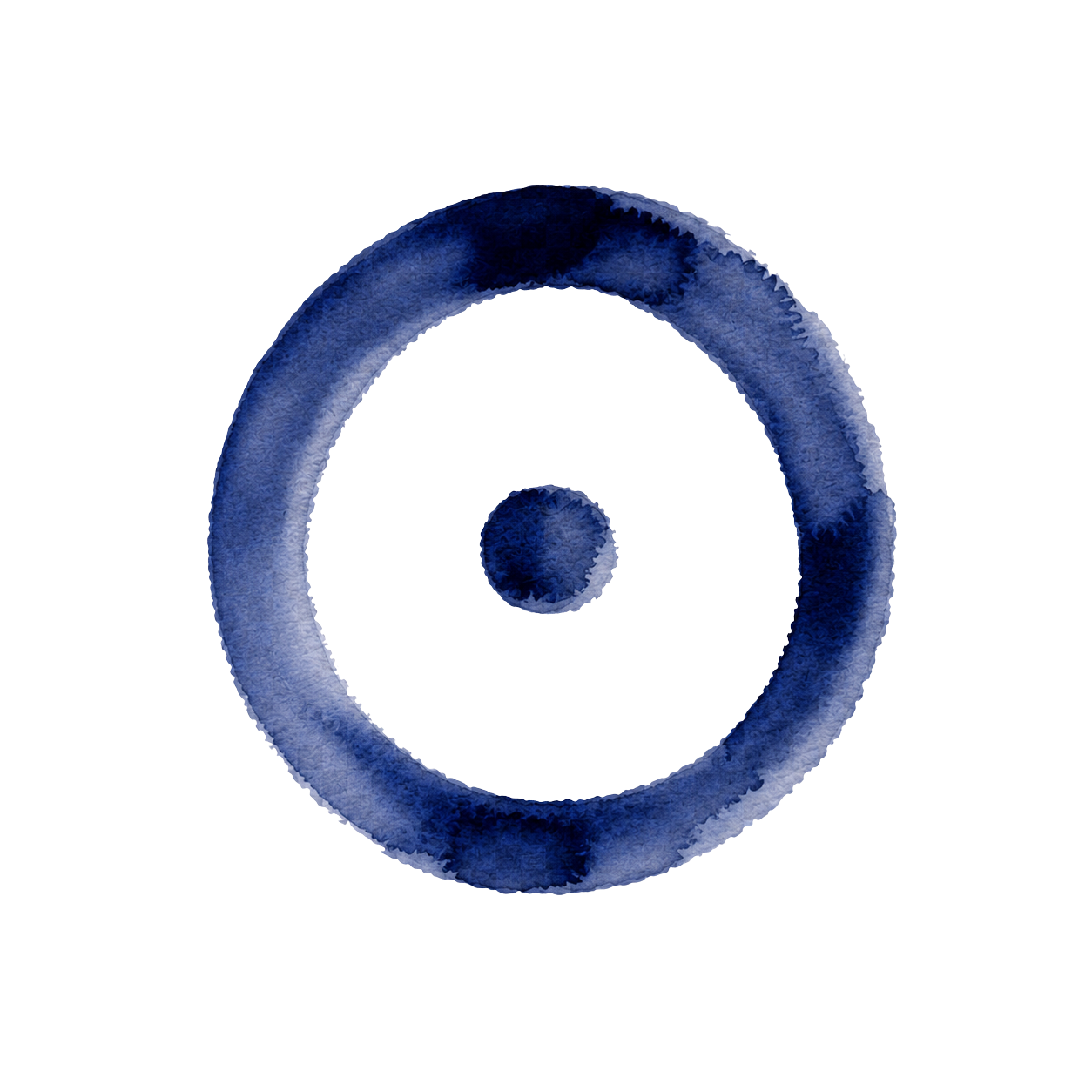
A beautiful symbol for One is the circumpunct - a point within a circle: ☉
The central point is the beginning. It has no length, no width, no direction. And yet from it, every line can be drawn.
The circle surrounding it suggests wholeness, while the point marks the centre: the place from which everything else is understood.
In this sense, One is not simply “first.” It is origin, centre and identity.
The point
In geometry, a point marks position without dimension. Symbolically, this makes it a wonderful image of potential.
Nothing has happened yet.
There is no journey, because there is nowhere else to go. No relationship, because there is nothing yet to relate to. No tension between opposites.
There is simply presence.
Before direction, there is presence.
The point contains every possible line, but none has yet been chosen.
We know this feeling. It is the moment before we send the message, make the appointment, leave the job, start the course, say yes or finally say no. The possibilities are still open, but eventually one direction has to be chosen.
This is part of the mystery of One: it represents something complete in itself, while simultaneously containing everything that might follow.
The One and the centre
The circumpunct adds another layer.
A point placed at the centre of a circle becomes more than an origin. It becomes an organising principle.
We recognise this symbol most readily as the sign of the Sun, which is fitting. The Sun is the centre around which the planets of our solar system move, and symbolically it has long carried associations with illumination, consciousness and the vital centre of the self.
To be centred does not mean that nothing moves around us. Quite the opposite. It means there is a place within us from which movement can be understood.
Think of a difficult conversation. Someone may be upset with you, asking something of you, or telling you how they see the situation. Being centred doesn’t mean refusing to listen or stubbornly holding your ground. It means being able to hear another person without immediately losing your own position in the process. Social media gives us a daily version of this: other people’s certainty, outrage and advice can quickly drown out our own sense of position.
This is the difference between individuality and individualism. One gives us a centre of our own, but it does not require us to shut everyone else out.
And so One asks a deceptively simple question: Where is your centre?
One in the Tarot
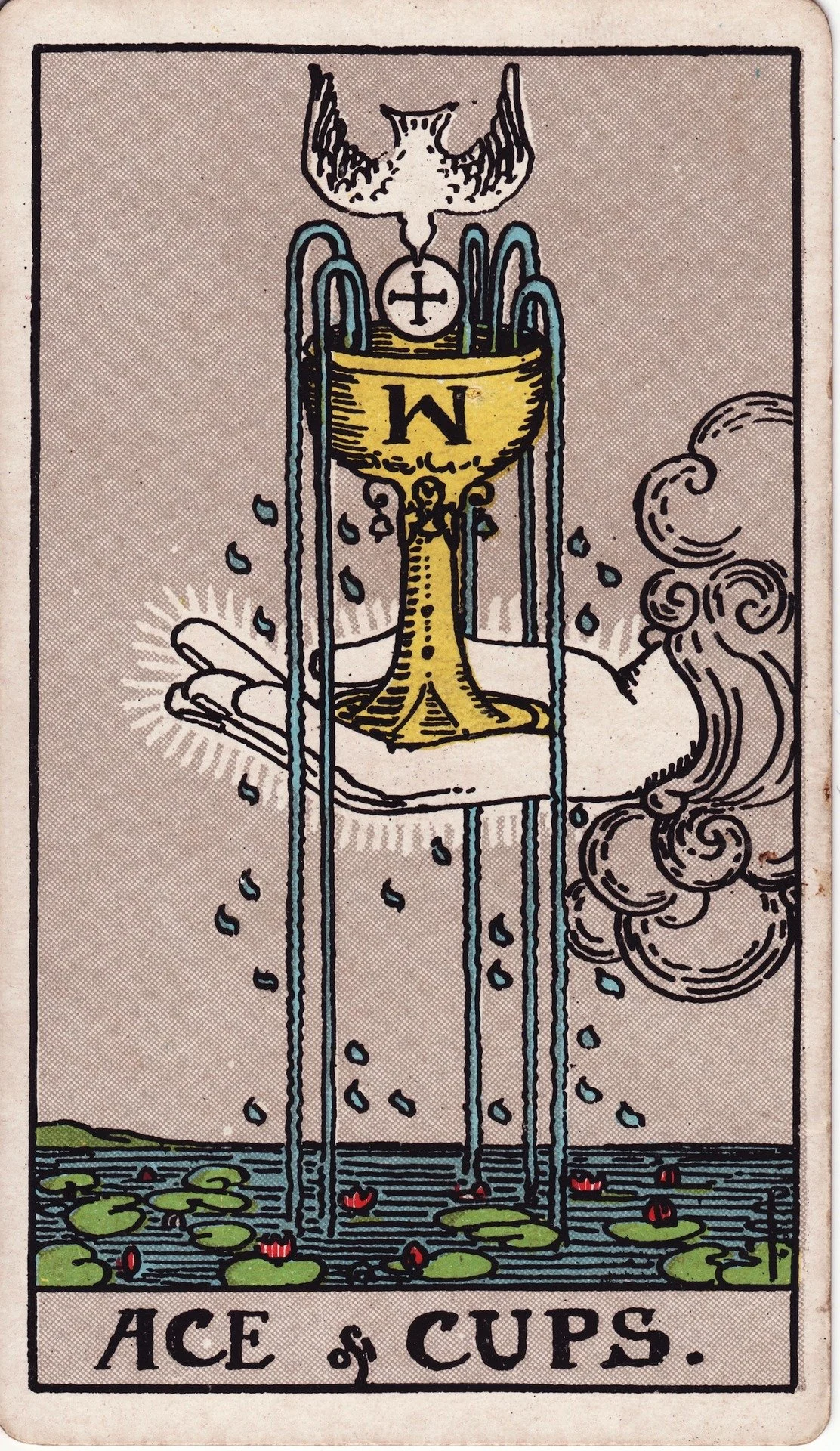
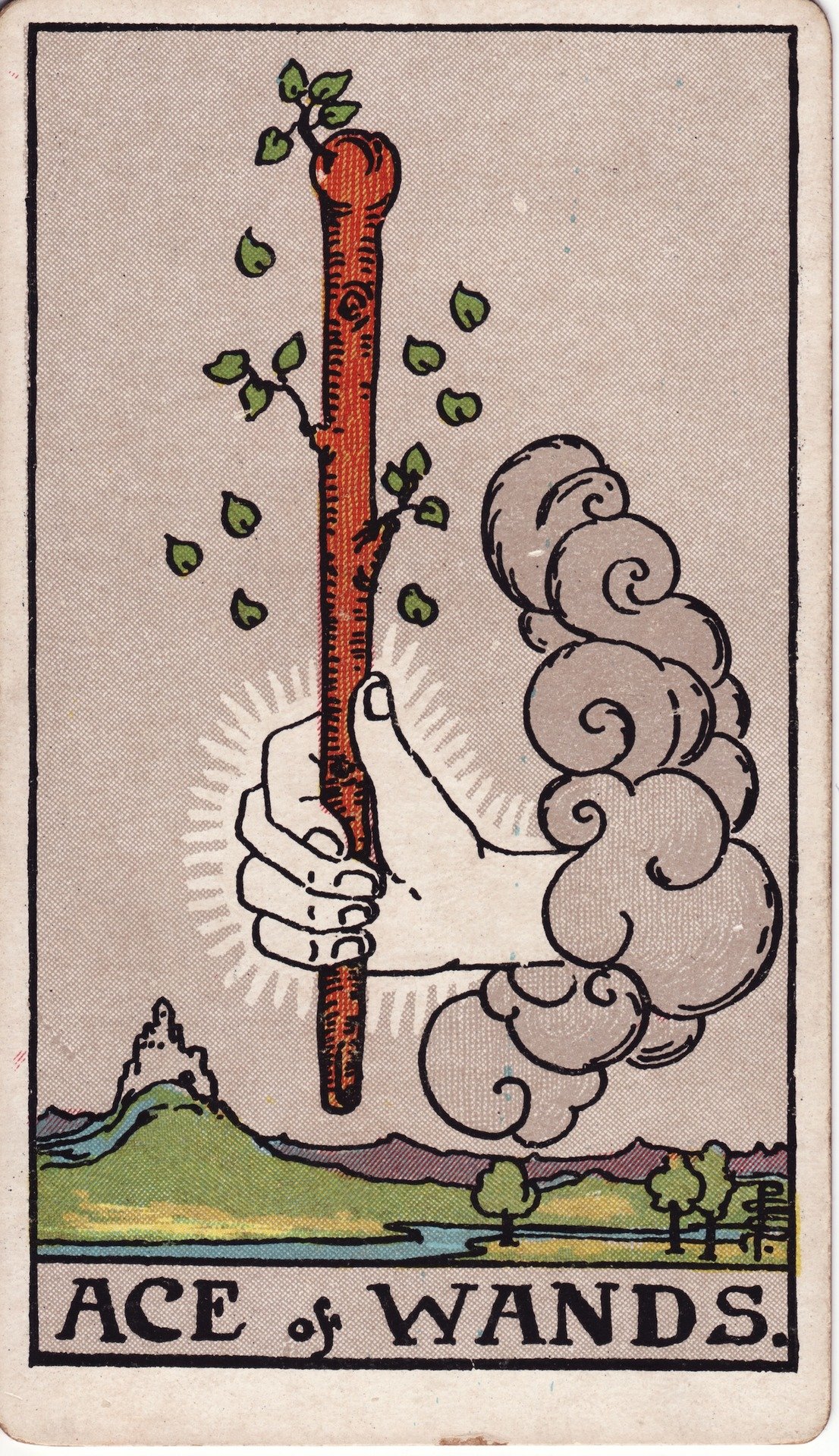
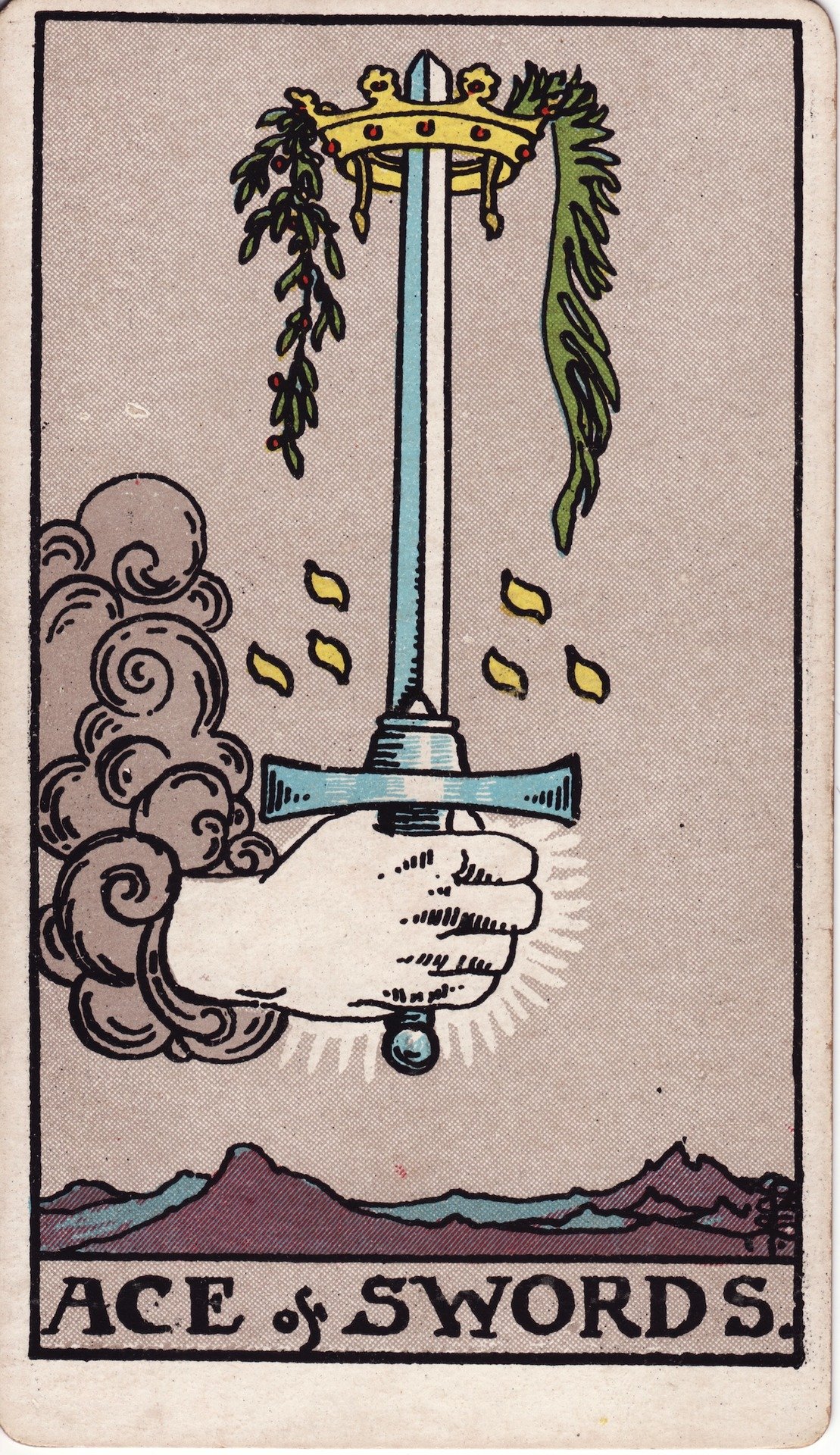
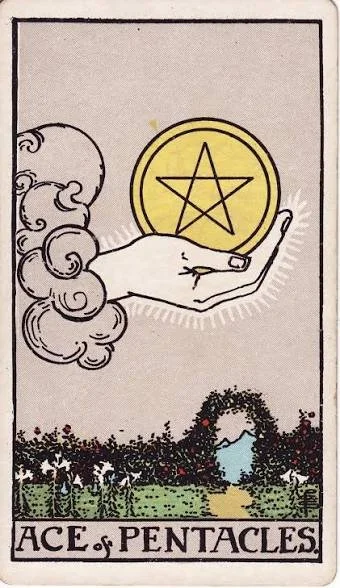
The same principle appears in the Aces of the Tarot. Each Ace contains an element in its purest potential form:
The Ace of Wands is the first spark of will or inspiration.
The Ace of Cups is the first movement of feeling.
The Ace of Swords is the first clear thought, truth or perception.
The Ace of Pentacles is the first seed of something capable of becoming tangible.
None of them guarantees what will happen next.
An Ace is possibility rather than completion. It’s an indication of raw potential. The cards often depict their energy as vigorous, overflowing and as a gift presented. It’s something that must be seized, but it goes nowhere if it’s not acted on.
Something has appeared and what happens to it depends on what follows.
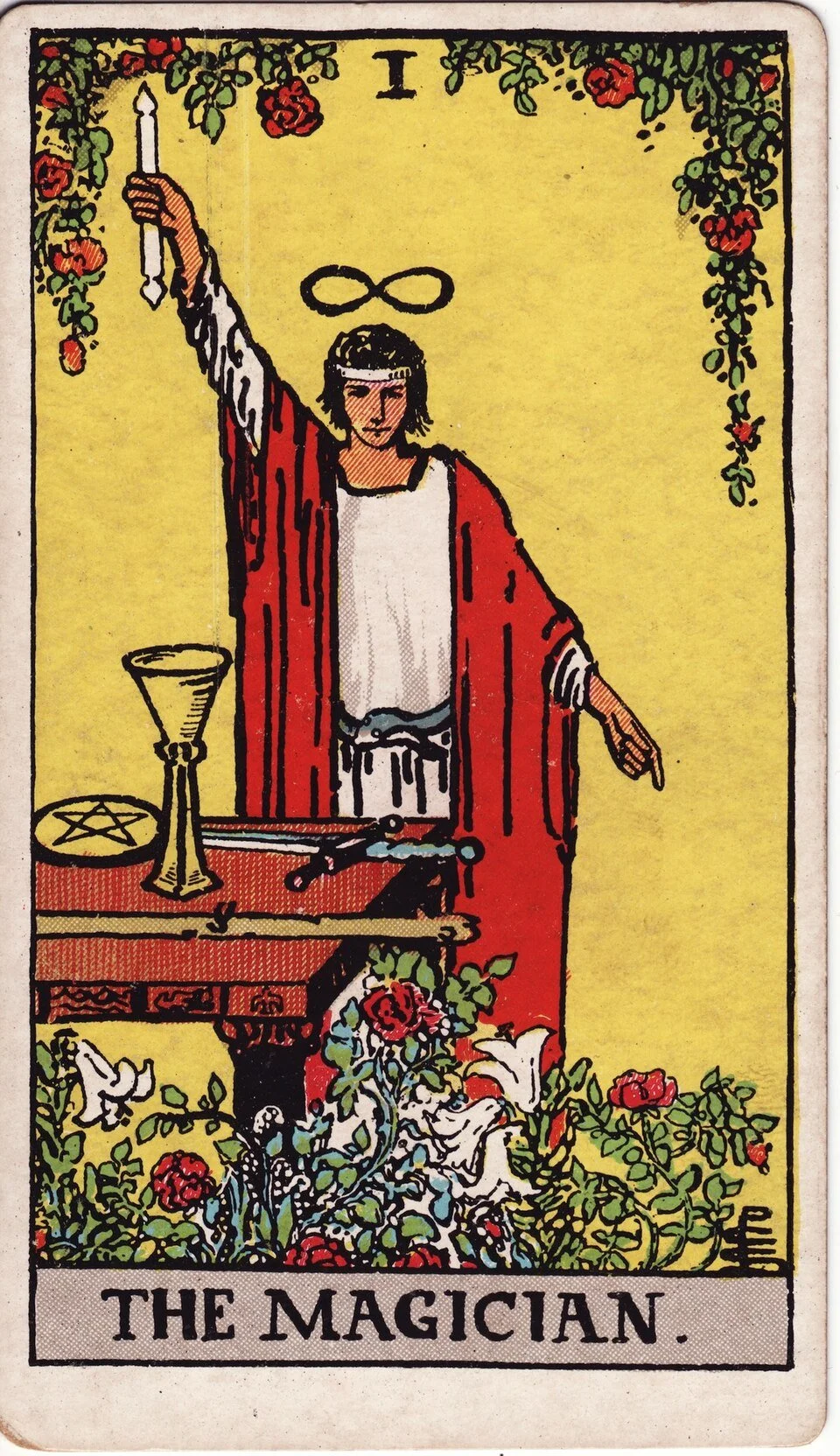
The Magician carries another expression of One. As card 1 of the Major Arcana, the Magician takes potential and gives it direction. The tools are on the table. The question becomes: what will you do with what has been given?
The Monad
For the Pythagoreans, One was the Monad - unity before multiplicity.
The Monad was not simply another number among numbers. It represented the principle from which number itself emerged.
Two introduces difference.
Three creates relationship and structure.
Four begins to stabilise form.
One comes before all of this. It is unity before division.
This idea appears repeatedly in mystical traditions: the many emerging from the One, multiplicity unfolding from an original unity.
The seed is a good earthly image for it, because a seed looks small and singular, yet within it lies an entire pattern waiting to unfold.
The point contains the line in potential.
The shadow of One
Every symbol contains its tension. The strength of One is individuality, clarity, initiative and self-possession. But taken too far, those qualities become isolation. The centred self can become the self that recognises nothing outside itself.
Independence can become separation.
Certainty can become rigidity.
Identity can become ego.
A point may be complete in itself, but if it never extends outward, it never becomes a path.
And perhaps that is the deeper lesson of One.
We need a centre.
We need the ability to say I am.
But the story cannot end there.
Eventually, the point must become a line and One must encounter Two.
When we do encounter Two, something entirely new occurs: difference, relationship, reflection and the discovery of the Other.
For now, though, there is only the point.
The first mark. The first presence. The quiet moment before everything begins.
A question to carry with you
Where in your life are you still standing at the point, knowing a line eventually needs to be drawn?